Modelling is used in areas such as land-use planning, assessing the location and siting of a new plant, and planning changes to existing plants.
We can help you identify the accident scenarios and emissions associated with your project and operations that require modelling, so that the modelling is carried out in a timely and appropriate manner.
Consequence modelling and analysis
When designing a new production facility, accident hazards and their impact areas need to be identified at an early stage of the project.
We use consequence modelling to determine how the identified accident scenarios may affect the siting of the plant, the plant design and the choice of technologies and chemicals used. The modelling is used, for example, to assess the siting of a facility for handling or storing hazardous chemicals, to plan major modifications and to support land use planning. Modelling can also be used to plan the layout of a facility and the location of activities.
Consequence modelling can provide information on, for example:
-
the spread of thermal radiation, for example in the case of combustible liquid fires
-
pressure effects and ejections from explosions
-
health effects, such as the dispersion of toxic gases and vapours
Our experts carry out consequence modelling and analysis both for industrial investment projects and to support the design of modifications to existing installations. We also provide expert services in identifying accident hazards, conducting risk assessment workshops and preparing the necessary documentation.
Accident risk assessment
We carry out consequence modelling using the BREEZE Incident Analyst software, a widely used tool for assessing the physical effects of chemical accidents in industry and government. The software is based on internationally accepted physical models for fire, explosion and gas leakage scenarios and is also suitable for consequence assessment according to Tukes guidelines.
-
Gas dispersion models: four dispersion models (DEGADIS, SLAB, AFTOX and INPUFF) to model both lighter and heavier gases than air. The models are suitable for many types of emission sources, such as spray emissions or releases from pipe bursts and releases from ponds of volatile chemicals.
-
Thermal radiation models for fires: Four fire models (GRI open and closed pond fires, shower fires and U.S. EPA BLEVE model) allow estimation of the level of thermal radiation produced by a fire. The models also calculate the distance within which a given level of thermal radiation will be exceeded
-
Vapor cloud explosion models: Four vapor cloud explosion models (U.S. Army and HSE TNT equivalence models, TNO Multi-Energy and Baker-Strehlow-Tang) allow the estimation of the intensity of the shock waves. The models take into account, among other things, the effects of proximity to the ground, the density of obstacles and the speed of flame propagation
Air emissions and odour dispersion modelling
You need air emissions and odour dispersion modelling to support the planning, permitting and investment design of your industrial facility, to assess the air quality, health and environmental impacts of emissions and to meet regulatory requirements.
Our modelling work is based on strong expertise and experience in a wide range of industrial sectors and community structures. In addition to the results of emission measurements, we use meteorological data, landforms and the infrastructure and building stock in the area.
We use the AERMOD software, an internationally accepted tool for emission dispersion assessment that is widely used by public authorities. We always carry out modelling taking into account site-specific characteristics.
Modelling results and support service
As a result of the modelling, you will receive a clear report presenting the results as numerical concentrations and map-based visualisations. The results are compared with existing guidance and limit values, and the report supports regulatory, planning and decision making.
We also provide comprehensive support for emission measurements, interpretation of results and planning of emission management and reduction measures.
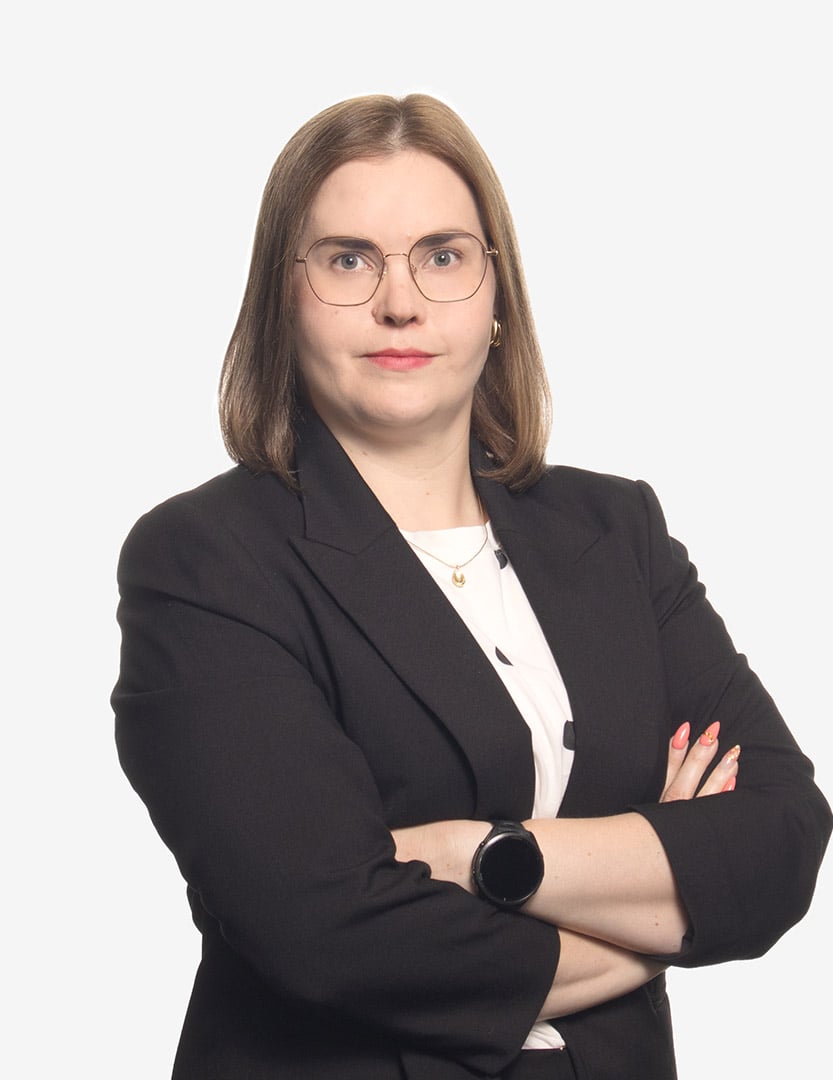 Laura Lehtonen engineering director+ 358 400 689 635 laura.lehtonen
/Br%C3%A4ndikuvat/Ty%C3%B6maakuvat/maanalaisen-rakentamisen-suunnittelupalvelut-paakuva-ilona-h%C3%A4kkinen.jpg?width=1920&height=1080&name=maanalaisen-rakentamisen-suunnittelupalvelut-paakuva-ilona-h%C3%A4kkinen.jpg)